
Summary
This guide explains what TMJ massage is, how it may support jaw comfort, common techniques, what to expect during a session, helpful home habits, and when you may need professional advice.
Introduction
Jaw tension can make simple activities such as eating, speaking, yawning, or relaxing feel uncomfortable. Some people also notice headaches, facial soreness, or jaw clicking after long periods of stress or teeth clenching.
A TMJ massage focuses on the muscles around the jaw, face, temples, and neck. Depending on the cause of your symptoms, it may help reduce muscle tension and support easier movement.
What Is TMJ Massage?
A TMJ massage focuses on the muscles around the jaw, face, temples, neck, and shoulders. It uses gentle pressure to ease tension that may develop from stress, teeth clenching, posture, or overuse.
Unlike a general massage, the session focuses on the muscles involved in jaw movement. The therapist may work on the masseter muscles in the cheeks, the temporalis muscles near the temples, and nearby neck muscles.
Your therapist should adjust pressure so the treatment remains comfortable throughout. TMJ massage may reduce muscle tightness and make everyday movements like chewing, speaking, or yawning easier.
How Does a TMJ Massage Work?
A TMJ massage uses gentle, focused techniques around the jaw and nearby muscles. The aim is to relax tight tissue and reduce discomfort. It does not permanently change your bite or replace a dental or medical evaluation.
Jaw And Facial Muscle Massage
The therapist may gently target the chewing muscles along your cheeks and the muscles around your temples. These areas can hold extra tension when you clench your jaw, feel stressed, or strain them repeatedly.
The treatment should feel controlled and comfortable. Tell your therapist right away if any spot feels too tender or the pressure becomes uncomfortable.
Neck And Shoulder Work
Jaw tension can occur alongside tightness in the neck and shoulders. Depending on the session, the therapist may include these areas to support relaxation and reduce related muscle tension.
Complementary Techniques For Jaw Tension
Some therapeutic massage sessions may include complementary techniques alongside gentle work on the jaw and surrounding muscles. The techniques used should depend on your symptoms and comfort level. If the cause of your jaw pain is unclear, consult a dental or medical professional before relying on massage.
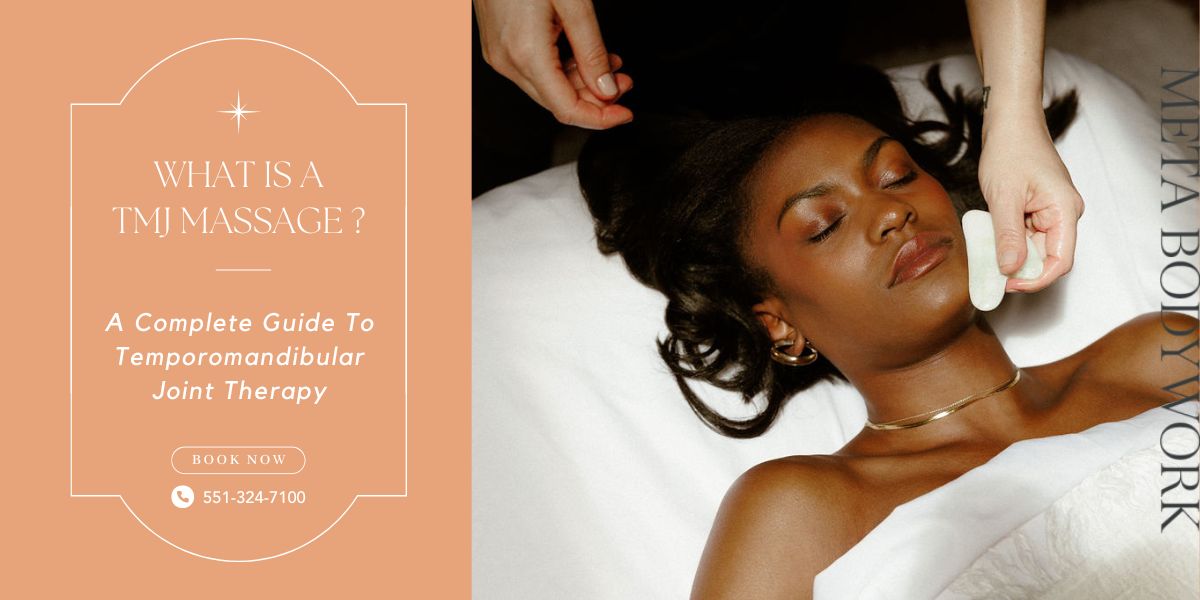
Facial cupping and gua sha may be offered as part of certain sessions, but they are not essential to TMJ massage.
What Are The Possible Benefits of TMJ Massage?
When jaw discomfort is linked to tight muscles, massage may help the area feel more relaxed. Some people may notice:
- Less tightness in the jaw and face
- More comfortable chewing or speaking
- Reduced neck and shoulder tension
- Greater awareness of clenching
- Temporary relief from muscle-related soreness
Gentle massage, relaxation, and simple daily habits may help ease jaw tension for some people with TMD, but results depend on the underlying cause.
Massage may support comfort, but it is not a cure for TMD, teeth grinding, tinnitus, or migraines.
What Should You Expect During a TMJ Massage Session?
Before the session begins, explain where you feel discomfort, which movements make it worse, and whether you have already seen a dentist or doctor.
During the session, the therapist may:
- Ask about your symptoms and what pressure you prefer.
- Work gently around the jaw, cheeks, temples, face, neck, or shoulders.
- Include facial cupping or gua sha when appropriate.
- Check your comfort throughout the treatment.
- Suggest simple habits to help manage tension between appointments.
Before the session, ask whether the therapist uses only external techniques or also works inside the mouth. You can decline any technique you are uncomfortable with.
When Can Therapeutic Massage Help With Jaw Tension?
A therapeutic massage may be worth discussing when jaw or facial tension feels connected to stress, posture, muscle overuse, or clenching.
It may be useful for people who notice:
- Tight jaw muscles after stressful days
- Facial or temple tension
- Neck and shoulder tightness alongside jaw discomfort
- Soreness after waking up
- Muscle-related discomfort while chewing
If discomfort continues, worsens, or makes eating and speaking difficult, schedule an evaluation before relying on massage as your primary care.
How Can You Manage Jaw Tension At Home?
Simple daily habits can help reduce strain on the jaw:
- Keep your teeth slightly apart when you are not eating.
- Limit gum chewing and nail biting.
- Choose softer foods during painful flare-ups.
- Avoid opening your mouth unusually wide.
- Use a wrapped warm or cold pack if it feels helpful.
- Practice relaxation when you notice yourself clenching.
A dentist, doctor, or qualified physical therapist can recommend exercises that suit your condition. Avoid forcing jaw movements or copying exercises that were not recommended for you.
When Should You See a Dentist or Doctor?
Arrange an evaluation if you have ongoing jaw pain, painful clicking, repeated locking, swelling, or difficulty opening your mouth. Jaw pain can have causes that massage cannot address.
Seek urgent care if your jaw gets stuck or you cannot eat or drink. A professional can determine whether you need dental treatment, physical therapy, medication, or another form of care.
Conclusion
A TMJ massage may help relax tense jaw and facial muscles, especially when stress or clenching contributes to discomfort. Understanding the cause of your symptoms helps you choose the right next step.
If you are considering TMJ massage in Jersey City, contact META Bodywork to ask what the META Halo session includes and whether it is right for your needs.
Frequently Asked Questions
Does TMJ massage cure TMD?
No. TMJ massage may reduce muscle tension, but TMD includes several joint and muscle conditions. A dentist or doctor should assess recurring, severe, or limiting symptoms.
Can I massage my jaw at home?
Gentle self-massage may help sore jaw muscles. Use light pressure, follow professional guidance, and stop if pain increases or your jaw movement becomes more restricted.
Can TMJ massage stop teeth grinding?
TMJ massage may ease muscle soreness linked to grinding, but it does not reliably stop bruxism. Speak with your dentist about tooth wear, clenching, or morning jaw pain.
How often should I get a TMJ massage?
No schedule suits everyone. Frequency depends on your symptoms, response, and overall care plan. Talk with a qualified professional about recurring pain before booking regular sessions.